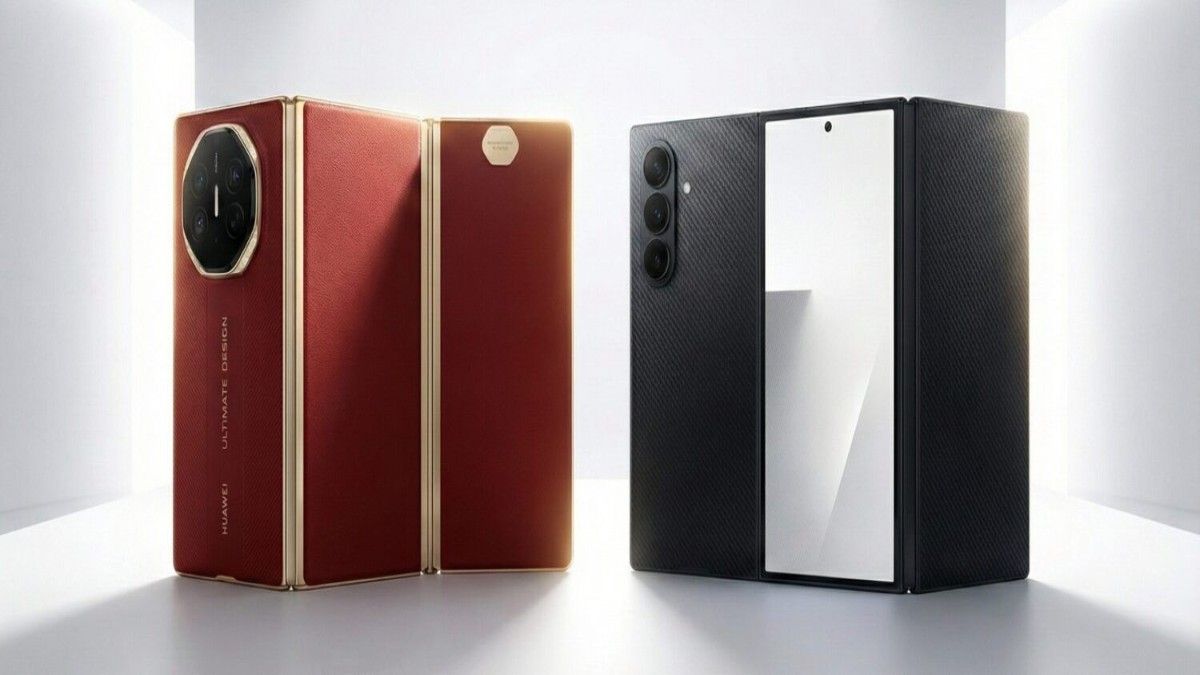
Yes, Samsung Galaxy Z TriFold vs Huawei Mate XTs is the better tri-fold smartphone, here’s the bottom line: the Galaxy Z TriFold delivers a smoother, brighter display, stronger global software support and a more polished all-around experience- while the Mate XTs delivers greater flexibility, stylus support, and faster charging.
Samsung Galaxy Z TriFold vs Huawei Mate XTs- Key Comparison at a Glance
Before we dive deeper, here’s how these two next-gen foldables stack up at a high level:
| Feature | Samsung Galaxy Z TriFold | Huawei Mate XTs |
|---|---|---|
| Main unfolded screen | 10.0-inch Dynamic AMOLED 2X, 120Hz | 10.2-inch OLED, 90Hz |
| Cover/secondary screens | 6.5-inch 120Hz | 6.4“, 7.9“, 10.2“ OLED panels |
| Processor | Snapdragon 8 Elite | Kirin 9020 |
| Software | Android 16 + OneUI (full Google services) | HarmonyOS (no Google services) |
| Charging | 45W wired / 15W wireless | 66W wired / 50W wireless + reverse |
| Camera | 200MP + 12MP + 10MP | 50MP + 40MP + 12MP + 1.5MP |
| Comparison based on multiple sources. |
Samsung Galaxy Z TriFold vs Huawei Mate XTs: Display & Design Face-off
Vibrant displays: bright and smooth vs flexible and flexible
-
The Galaxy Z TriFold unfolds into a 10-inch QXGA+ Dynamic AMOLED 2X display offering up to 1,600 nits peak brightness, 120 Hz adaptive refresh rate, and crisp image quality — ideal for video, gaming, and multitasking. Its outer or “cover” screen is a 6.5-inch Full HD+ AMOLED, with 422 ppi, 120 Hz refresh and up to 2,600 nits brightness, ensuring sharp visuals even in bright daylight.
-
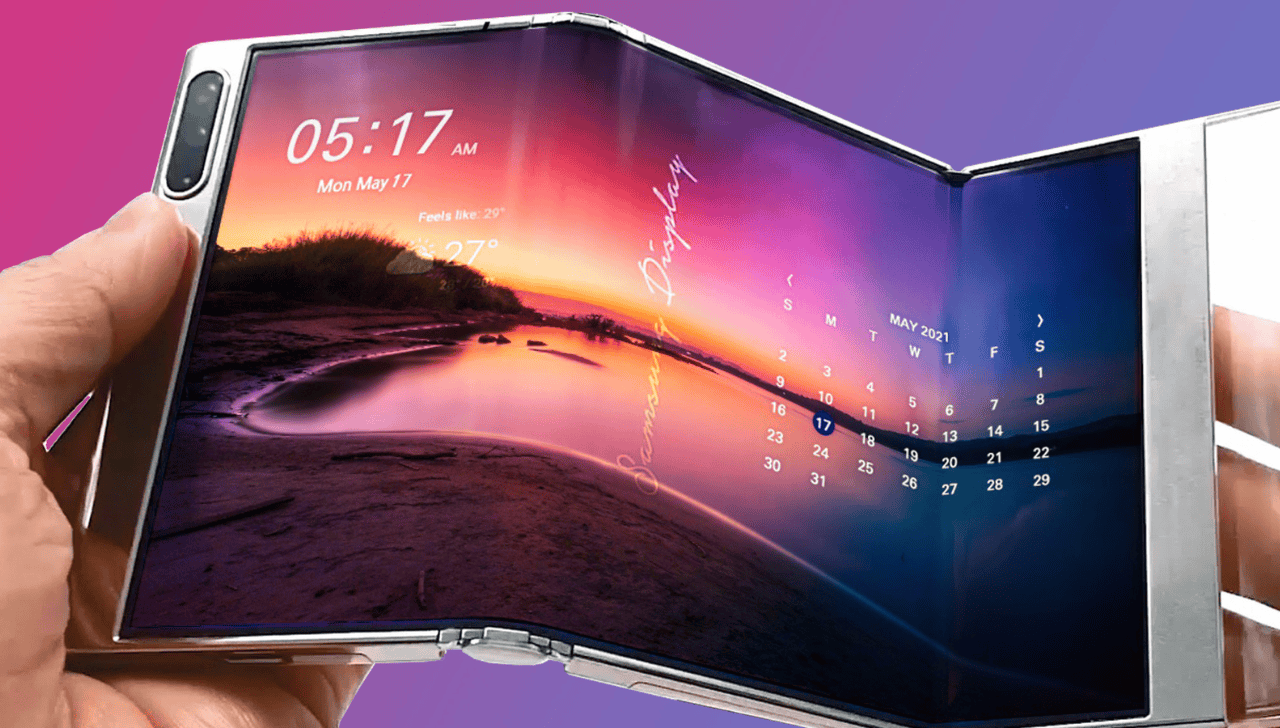
The Mate XTs chooses a different route: when fully opened it gives you a 10.2-inch OLED LTPO display, with flexible folding — switching between 6.4-inch, 7.9-inch, and 10.2-inch modes depending on how it’s folded. It supports 1.07 billion colours, P3 wide colour gamut, 1440 Hz PWM dimming, and a 240 Hz touch sampling rate.
-
In practice: Samsung’s coil-fold design protects the inner display by folding inward, giving it a more traditional “phone-to-tablet” feel. The materials include Corning Gorilla Glass Ceramic 2 for the cover and a ceramic-glass fibre reinforced back for durability.
-
Huawei’s approach gives versatility — you can use it in multiple screen modes, and the outer OLED (when folded) serves as a usable screen without needing an extra display. That said, because of the outward folding design, there could be long-term durability concerns.
Verdict (Display & Design): If you prioritise a bright, smooth, premium display and worry less about folding modes — Galaxy Z TriFold wins. If you value flexible folding, multiple screen modes and stylus input — Mate XTs might appeal more.
Read More: OnePlus 15R & OnePlus Pad Go 2 Launch in India on December 17 — What You Must Know
Galaxy Z TriFold — Pixel-heavy powerhouse
-
Rear cameras: 200 MP main sensor (with optical image stabilization), 12 MP ultrawide, and 10 MP telephoto lens with 3× optical zoom (digital zoom up to 30×). Selfie cameras: two 10 MP units — one on the cover screen and one under the main display.
-
This setup promises high-resolution shots, good detail even in daylight and ample zoom for distant subjects — a strong play for users who like ultra-detailed photos or large prints.
Mate XTs — Versatile shooters with pro-style flexibility
-
Rear cameras: 50 MP main sensor with variable aperture and OIS, a 40 MP ultrawide, 12 MP periscope telephoto (with OIS and up to 5.5× optical zoom, 50× digital zoom), plus a 1.5 MP multispectral sensor for enhanced colour accuracy. Front camera is 8 MP.
-
The periscope telephoto gives you real optical zoom advantage, and the multispectral sensor may help with better colour reproduction and dynamic range — useful for creative photography, portraits, or low-light shots.
Verdict (Camera): If you want extremely high-resolution photos with great detail — go TriFold. If you prefer flexibility (zoom ranges, colour accuracy, creative control) — Mate XTs is compelling.
Performance, Battery & Software: Speed and Ecosystem vs Flexibility
Power and smoothness- Galaxy Z TriFold
-
The Z TriFold is powered by Snapdragon 8 Elite for Galaxy chipset, paired with up to 16 GB RAM and 1 TB storage — enough muscle for smooth multitasking, heavy apps and foldable-UI transitions.
-
Samsung builds in Android 16 with One UI 8, giving full access to Google services, global app compatibility, and robust software support. It also offers native Samsung DeX support — meaning you can convert your phone into a desktop-like experience without extra hardware.
-
Battery: Both phones pack 5,600 mAh, but Samsung’s charging is limited to 45 W wired and 15 W wireless.
Flexibility and fast charging — Mate XTs’ strengths
-
Mate XTs runs on Huawei’s own Kirin 9020 chipset, and delivers reportedly 20–36% performance improvement over previous generation.
-
The OS is HarmonyOS 5.1, which may work well — but note that because of global restrictions, it may lack full Google services and some app compatibility outside China.
-
Where Huawei shines: fast charging. Mate XTs supports 66 W wired, 50 W wireless, plus reverse wireless charging. That makes it more future-proof for heavy users or those constantly on the go.
Verdict (Performance & Battery): For global use, app compatibility and productivity — Galaxy Z TriFold is more practical. For fast charging, flexibility, and users comfortable with HarmonyOS — Mate XTs appeals more.
Real-World Use: Which Type of User Should Buy Which?
| You value… | Choose |
|---|---|
| A smooth, bright screen, Google services, app compatibility, tablet-like usability, desktop mode (DeX), high-res photos | Galaxy Z TriFold |
| Flexible folding modes, stylus support for drawing/notes, fast charging, optical zoom versatility, creative camera control | Huawei Mate XTs |
-
For global users — especially outside China — Samsung’s ecosystem, software support, and interoperability make Galaxy Z TriFold a safer, more future-ready choice.
-
For creative users, artists, or those wanting maximum flexibility — Mate XTs’ multi-screen modes, stylus compatibility, and powerful zoom/camera versatility may be more attractive.
-
For travellers or constant media consumers — both phones offer large screens and big batteries, but Samsung’s display brightness and Android ecosystem might give it an edge.
Final Verdict
While Huawei’s Mate XTs deserves respect for pushing folding innovation, offering stylus support and rapid charging, the Samsung Galaxy Z TriFold feels like the more complete, polished tri-fold phone for most users today. Its combination of a bright, smooth display, strong as-built materials, global software ecosystem, and foldable-friendly features (like DeX) add up to a more balanced, dependable phone.
Huawei’s approach prioritises flexibility and creative use — and if you understand the trade-offs (e.g. software limitations globally), it remains a worthy contender.
FAQs
Q: Which phone is better for worldwide usage and app support?
A: The Samsung Galaxy Z TriFold is better for worldwide use owing to its use of Android 16 with One UI 8 and full Google services compatibility. Mate XTs runs HarmonyOS 5.1, which may lack certain global apps or services outside China.
Q: Which has a better display for movies, streaming or outdoor use?
A: The Galaxy Z TriFold offers a brighter and smoother display (up to 1,600 nits, 120 Hz adaptive), making it ideal for video streaming and outdoor use.
Q: If I care most about camera versatility and zoom, which should I pick?
A: If you prefer zoom flexibility and creative control, Huawei Mate XTs with its periscope telephoto lens, variable-aperture main sensor and multispectral camera gives more versatility.
Q: Which phone charges faster and is better for heavy daily use?
A: Huawei Mate XTs charges faster — 66 W wired and 50 W wireless (plus reverse charging). Samsung Galaxy Z TriFold offers slower charging (45 W wired, 15 W wireless).
Q: Which is more durable and better built for long-term use?
A: Samsung Galaxy Z TriFold uses robust materials — Gorilla Glass Ceramic 2, an advanced armor aluminum frame and inward-folding design to protect the display. Mate XTs offers a flexible outward-fold design, which adds versatility but may raise long-term durability concerns.