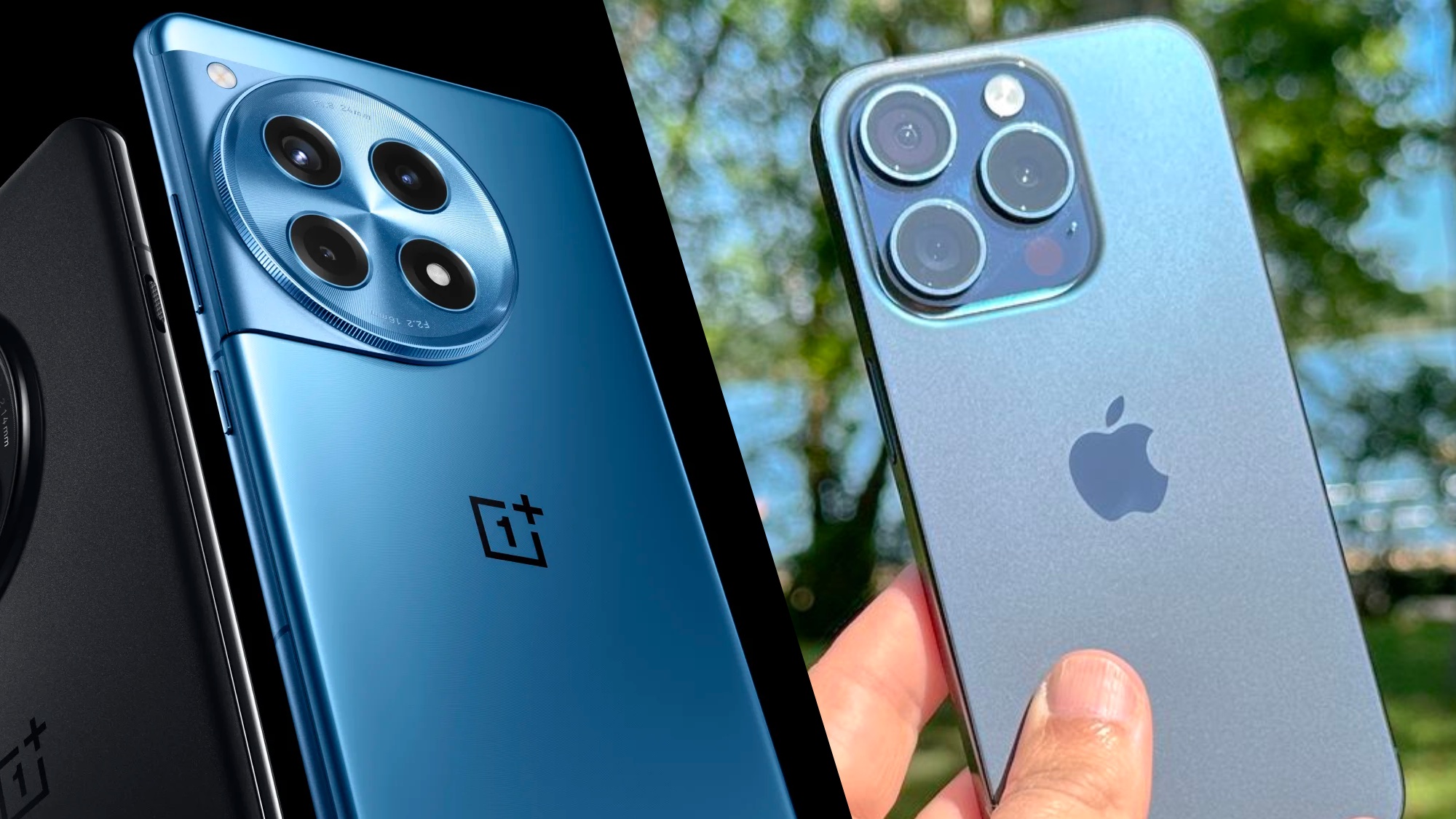
If you’re wondering “Which should I buy — the Realme GT 8 Pro or the OnePlus 15?”, the short answer is this: they cost essentially the same in India (starting at ₹72,999 for the 12 GB + 256 GB variant) and share the same powerhouse chip — so the decision really comes down to design quirks, display priorities, battery behaviour and what kind of user you are.
Here’s a full breakdown of Realme GT 8 Pro vs OnePlus 15, helping you pick which one fits you — no techno-jargon overload, just plain talk.
Realme GT 8 Pro vs OnePlus 15: Pricing & Positioning
Let’s start with the big picture. In India, both phones launch at the same price tier — around ₹72,999 for the 12GB+256GB variant.
Given this parity, it’s less about “which one is cheaper” and more about “which one gives you what you care about.” Both aim at the flagship crowd: high performance, premium features, and no major compromises.
Design and Build: Which flagship fits your style?
Realme GT 8 Pro
-
The standout: a swappable rear-camera island system — you can switch between different camera module ‘styles’. That’s wild for a premium phone.
-
Vegan leather finish option adds a tactile, warm feel—less slippery glass, more “grip and hold”.
-
Personality-driven design: if you like your phone to reflect you (quirky, bold), this one leans there.
OnePlus 15
-
A more classic premium look: slim bezels, clean aesthetics, high build quality.
-
Strong resistance credentials: IP68 (dust/water) plus IP69K (resists high-pressure water jets) in the OnePlus.
-
If you’re a “grown-up” flagship buyer—looking for understatement and reliability—this might pull you in.
Bottom line:
If you want fun, bold design → Realme GT 8 Pro.
If you want refined, premium, low-fuss style → OnePlus 15.
Display Face-Off: Sharpness, smoothness & outdoor visibility
Here’s where things get interesting in the Realme GT 8 Pro vs OnePlus 15 comparison.
Realme GT 8 Pro
-
6.79″ QHD+ AMOLED (≈ 1440×3136 resolution) with 144 Hz refresh rate.
-
Peak brightness: Up to 2,000 nits in High Brightness Mode (HBM) with claimed 7,000 nits peak.
-
Sharpness is its forte (higher resolution) and it’s tuned to wow.
OnePlus 15
-
6.78″ AMOLED (≈ 1272×2772 resolution) with 165 Hz refresh rate.
-
HBM brightness to about 1,800 nits, with “Sun Display” tech for outdoor readability.
-
Emphasis here: smoother animation (165 Hz) and a more “refined” overall display feel.
Which is better?
-
If you prioritise resolution and ultra-bright outdoors visibility → Realme
-
If you want silky smoothness and less focus on max resolution → OnePlus
Performance & Internals: Same chip, slightly different behavior
This is crucial in the Realme GT 8 Pro vs OnePlus 15 showdown—they share a lot under the hood.
Shared specs
-
Both use the Snapdragon 8 Elite Gen 5 chipset.
-
Both offer LPDDR5X RAM, UFS 4.1 storage in premium configurations.
So on paper, they’re neck and neck.
Real‐world difference
-
Cooling subsystem: Realme uses a 7,000 sq mm vapour chamber, OnePlus uses a 5,731 sq mm 3D chamber with Cryo-Velocity setup.
-
Internal benchmark results: Realme GT 8 Pro scored ~3,932,397 on AnTuTu in one test, OnePlus 15 ~3,615,565.
What does that mean for you?
In everyday use the differences will be subtle — both will blaze through apps, games and whatever you throw. But if you’re a heavy gamer or push your phone hard for graphics-intensive stuff, Realme might pull ahead slightly due to its cooling advantage and benchmark edge.
Also Read: OPPO Find X9 vs OnePlus 15 — Which flagship should you pick in India?
Battery & Charging: Runtime and refuels
Another important chapter in Realme GT 8 Pro vs OnePlus 15.
Realme GT 8 Pro
-
7,000 mAh battery.
-
120 W wired charging support.
-
In PCMark battery test (100%→20%), scored ~12.8 hours.
OnePlus 15
-
7,300 mAh battery (slightly higher).
-
Same 120 W wired charging + 50 W wireless. Realme too supports 50 W wireless.
-
In same PCMark test, scored ~17.1 hours.
-
Realme charged 20→100% in ~39 minutes, OnePlus did it in ~30 minutes in the test.
Takeaway:
If battery runtime is super important, OnePlus 15 takes the edge. If you’re fine with very good runtime and slightly faster style or design you can live with Realme’s battery, then Realme is fine.
Cameras: Photo & video capabilities
When it comes to Realme GT 8 Pro vs OnePlus 15, the cameras are both strong but lean in different directions.
Realme GT 8 Pro
-
Main sensor: 50 MP Sony IMX906.
-
Telephoto: a whopping 200 MP sensor in the telephoto module.
-
Ultra-wide: 50 MP. Front: 32 MP.
-
Partnership with Ricoh: special modes, colour science tweaks—aimed at photo enthusiasts who like to play with the camera.
-
Video: up to 4K at 60 fps. (Note: Realme doesn’t offer 8K in this spec sheet)
OnePlus 15
-
Main sensor: 50 MP (Sony IMX906). Ultra-wide: 50 MP. Telephoto: 50 MP with 3.5× optical zoom and 7× “optical-quality” zoom.
-
Front: 32 MP.
-
Video: Up to 8K at 30 fps + higher-frame-rate 4K modes.
-
More of a “safe-flagship” camera: strong all-round performance, less wild extras.
Which to pick?
-
If you love camera-experimentation, telephoto zooms and unique photo modes → Realme GT 8 Pro
-
If you prefer balanced, reliable flagship camera output with added video chops → OnePlus 15
Software & Ecosystem
-
OnePlus has long had a reputation for polished software (OxygenOS) and strong update support. In this Realme GT 8 Pro vs OnePlus 15 race, OnePlus leans into that “solid, matured flagship” vibe.
-
Realme brings its own UI (Realme UI 7.0) offering plenty of features and flair—but you may run into more “character” (good or bad) compared to the ultra-refined OnePlus environment.
-
Both run Android 16 (or the latest version for launch) and offer flagship-level connectivity, sensors, etc.
Final Verdict: Which one should you buy?
Putting together the Realme GT 8 Pro vs OnePlus 15 picture:
-
Choose Realme GT 8 Pro if:
-
You want a flagship that stands out (swappable camera island, vegan leather finish).
-
You prioritise ultra-bright display and slightly stronger benchmark numbers.
-
You’re into photo-experimentation and want a “fun” flagship.
-
-
Choose OnePlus 15 if:
-
You favour refined design, class-leading software polish and long-term reliability.
-
Battery endurance and video capabilities (8K, 4K high-fps) matter a lot to you.
-
You like to buy once and not worry too much; want “safe” flagship, not quirky.
-
Bottom line: Both are excellent phones. Neither is “wrong.” It really comes down to taste: super-flashy vs super-solid. Pick based on which flavour you prefer.
FAQs – Realme GT 8 Pro vs OnePlus 15
Q1: What is the price difference between Realme GT 8 Pro and OnePlus 15 in India?
A1: They launch at the same starting price of ~₹72,999 for the base 12 GB + 256 GB variant in India.
Q2: Which phone has better battery life — Realme GT 8 Pro or OnePlus 15?
A2: In testing, the OnePlus 15 lasted ~17.1 hours in PCMark battery test, while the Realme GT 8 Pro delivered ~12.8 hours. OnePlus has the edge.
Q3: Does Realme GT 8 Pro support 8K video recording like OnePlus 15?
A3: No. OnePlus 15 supports up to 8K at 30fps, while Realme GT 8 Pro supports up to 4K at 60fps.
Q4: Which display is more advanced?
A4: Realme GT 8 Pro has higher resolution (QHD+ approx) and 144 Hz refresh; OnePlus 15 trades a little resolution for 165 Hz refresh and slightly better smoothness. Choice depends on priority.
Q5: Is design a major differentiator?
A5: Yes — Realme GT 8 Pro brings a unique design language (swappable camera island, vegan leather finish) while OnePlus 15 sticks with the premium minimalist aesthetic and strong durability (IP69K).