The race to build the Best VRmodels Headsets 2026 is already a battlefield of broken promises and eye-watering price tags, leaving many enthusiasts wondering if the next generation is even worth the wait. While tech giants tout revolutionary features, a deeper look reveals a frustrating landscape of compromise, where groundbreaking tech is locked behind paywalls, and the quest for the perfect immersive experience feels more elusive than ever.
This isn’t just an upgrade cycle; it’s a confusing showdown where choosing the wrong headset could cost you thousands for a library of content that doesn’t exist yet.
The dream of perfect virtual reality—lightweight, wireless, with lifelike graphics and affordable for everyone—remains just that: a dream. As we look towards 2026, the market is splitting into two camps: obscenely expensive professional gear and watered-down consumer toys.
This guide cuts through the marketing noise to expose the reality of the top contenders vying for the title of the Best VR Headsets 2026, detailing not just their dazzling specs, but their glaring flaws and the real cost of entry.
Why Most Powerful VRmodels Headsets are Failing Mainstream Users
The high-end segment is where the most dramatic, jaw-dropping advancements are happening. These are the headsets powered by ludicrous resolution displays, advanced eye and face tracking, and processors that rival gaming PCs. But they come with a devastating catch.
The Apple Vision Pro Conundrum: A Masterpiece Nobody Can Afford
Apple’s entry into spatial computing was met with awe. Its stunning micro-OLED displays, intuitive eye-and-hand control system, and sleek design set a new bar for immersion. Yet, its stratospheric price instantly disqualified it from being a “best” headset for anyone but developers and the wealthy elite.
Worse, its closed ecosystem and lack of a dedicated gaming focus make it a productivity and media device first, leaving core VR gamers in the cold. It’s a technological marvel that highlights the industry’s biggest problem: pricing out its most passionate users.
Meta’s Quest Pro 2: A Desperate Attempt to Fix the Past?
Rumors of Meta’s next professional headset are swirling, promising to address the shortcomings of the original Quest Pro. Expect higher resolution, better passthrough AR, and more refined controllers.
But the question remains: will Meta finally deliver a compelling reason for professionals and creatives to adopt it widely, or will it become another costly niche product? Its success hinges entirely on software adoption, an area where Meta has repeatedly stumbled.
The Wireless Middle Ground: Compromise is the New Standard
This is the most popular category, dominated by Meta’s Quest line. The promise is all-in-one convenience with the option to connect to a powerful PC. For 2026, the expectation is a Meta Quest 4, but the trends are worrying.
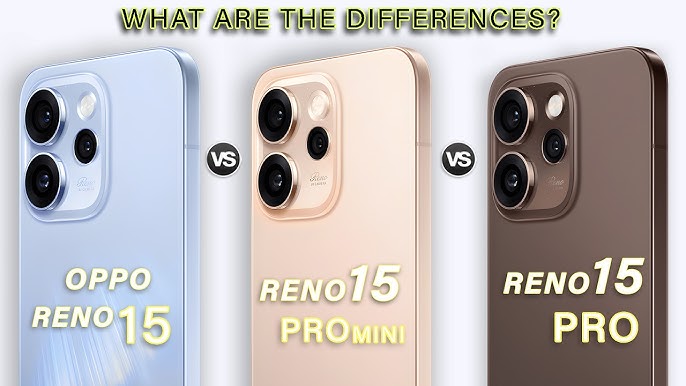
Read More: Oppo Reno 15 vs Oppo Reno 15 Pro vs Oppo Reno 15 Pro Mini- Which One Should You Pick?
The Performance Plateau
While processors will get faster and screens slightly sharper, the fundamental limitations of mobile chipset technology mean we’re hitting a plateau in standalone graphics.
The jump from Quest 2 to Quest 3 was significant, but the leap to a Quest 4 may be less about raw power and more about refinement—better ergonomics, slightly higher resolution, and incremental battery life improvements. The fear? Paying a premium for minor updates.
The PC VR Tether: Still a Mess
Even in 2026, connecting a wireless headset to a PC for high-end gaming will likely remain a finicky experience plagued by compression artifacts, latency, and network dependency. It’s a “best of both worlds” solution that often feels like the worst of both.
Specialized Headsets that Ignore the Masses
Sony PlayStation VR2’s Uncertain Future
The PSVR2 has fantastic hardware—gorgeous OLED screens, haptic feedback, and eye-tracking. But its fatal flaw is its limited scope: it’s tethered only to the PlayStation 5. With Sony’s first-party studio support being surprisingly slow, the library feels anemic.
Without a major commitment to blockbuster content, it risks becoming a beautiful accessory with nothing to do, a cautionary tale for any 2026 headset that relies on a single platform.
The Pimax and Varjo Dilemma: Power at Any Cost
Brands like Pimax and Varjo will continue to push the absolute boundaries of field-of-view and pixel-perfect clarity. Their 2026 offerings will be technological spectacles. However, they are notoriously complex to set up, demand the highest-end PCs, and are plagued with software bugs.
They are the choice of the hardcore simulation enthusiast, not the general public seeking the Best VR Headsets 2026 for everyday use.
Key Factors That Will Make or Break the Best VR Headsets
- Content is (Still) King: A headset is a useless plastic brick without great software. The platform with the strongest, most diverse exclusive games and applications will win.
- The Comfort Revolution: Users are tired of front-heavy “face bricks.” The winner will be the company that finally masters ergonomics for multi-hour sessions.
- Battery Life Breakthrough: Until we see a real leap in battery technology, long wireless sessions will require bulky external battery packs, ruining immersion.
- The “Killer App” Drought: The industry is still waiting for that one application—be it a game, social platform, or work tool—that makes VR essential instead of optional.
FAQs: Your Top Questions about VR in 2026, Answered
Q: What is the #1 best VR headset expected in 2026?
A: There is no single “best” headset. It depends entirely on your needs and budget. For standalone ease, a future Meta Quest will likely lead. For unmatched quality with a high-end PC, look at Apple Vision Pro successors or Varjo. For PlayStation gamers, the PSVR2 is your only option, albeit with a limited library.
Q: Are VR headsets in 2026 going to be wireless?
A: The mainstream market will be dominated by wireless (standalone) headsets like the Meta Quest line. However, the highest-fidelity experiences for professional use and extreme gaming will still require a physical or wireless tether to a powerful computer.
Q: What is the biggest problem with current VR that 2026 headsets need to fix?
A: The three major pain points are comfort/weight, battery life for wireless models, and the lack of must-have, system-selling “killer app” software. Improvements in screen resolution and processing power are secondary to solving these fundamental barriers.
Q: Will the Apple Vision Pro get cheaper by 2026?
A: While a more affordable version is heavily rumored, expecting a “cheap” Apple headset by 2026 is unrealistic. A lower price point would likely come with significant feature reductions, placing it in a different category altogether.
Q: Is it worth waiting for 2026 VR headsets, or should I buy now?
A: If you don’t own a headset now and are curious, buying a current-generation model like the Quest 3 is a great way to enter the ecosystem. The core experiences will be similar. However, if you are a current owner looking to upgrade, 2026 is shaping up to be a more significant leap, especially in display and comfort technology, making waiting a prudent choice.
The Verdict: A Future of Frustrating Potential
The pursuit of the Best VR Headsets 2026 reveals an industry at a crossroads. The technology is advancing at a breathtaking pace, but it is being gate-kept by cost, complexity, and a frustrating lack of cohesive vision. The headset that will truly dominate will be the one that finally balances cutting-edge innovation with accessibility, comfort, and a compelling reason to keep it on your head.
As of now, that perfect device remains on the horizon, a specter of what could be, reminding us that in VR, the future is always just one more expensive upgrade away. Choose wisely, because the real virtual reality might be the emptiness of your wallet after buying into the wrong dream.