You know when a phone drops and the tech world collectively gasps? That’s exactly what happened when Huawei Mate XTs Ultimate was revealed. It’s not just another foldable — this bad boy folds twice, giving you three usable screen modes. Crazy, right? In this post, I’ll walk you through everything that matters: what it is, how it works, where it shines, and where it might stumble (because nothing’s perfect).
Table of Contents
ToggleWhat is Huawei Mate XTs Ultimate?
Huawei is bold. They didn’t just want to compete with other foldables — they wanted to leap ahead. The Huawei Mate XTs Ultimate (sometimes called “Ultimate Design”) is their answer: a tri-fold smartphone, with two hinges, three screen configurations, and flagship specs. It first hit the Chinese market in September 2024, then started rolling out globally in early 2025.
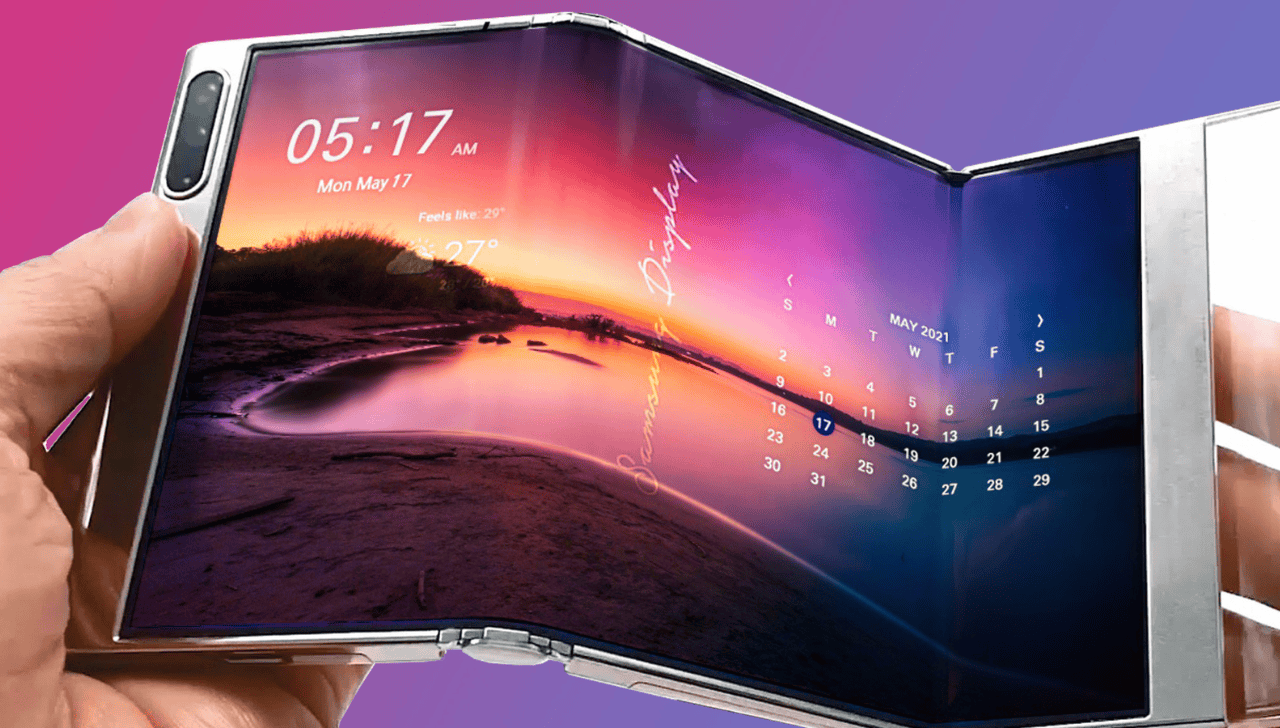
In short: when folded fully it’s a 6.4-inch phone. Unfold once, and you get 7.9 inches. Unfold fully — boom — a 10.2-inch tablet-like display. That’s three states, one device.
Design & Display: Fold, Fold Again
Folding That Changes Everything
Let me put it this way: the hinge setup is the star here. With two hinges, the Huawei Mate XTs Ultimate can collapse into three forms. That means you can use it like a phone, a mid-size tablet, or a “full” tablet. That kind of flexibility is still super rare in 2025.
When fully open, the screens align to a 10.2-inch canvas, with a resolution around 3,184 × 2,232 px. In the middle (one fold) you get 7.9 inches, and when fully closed it shrinks to a “normal” 6.4-inch display. So if you’re reading, browsing, watching, the display adapts to your needs.
Physically, it’s pretty slim when open: just 3.6 mm at its thinnest point. It weighs in around 298 grams — heavier than your regular flagship for sure, but acceptable for what you’re getting.
Under the Hood: Power & Storage
Huawei didn’t go light on the internals. The Mate XTs Ultimate is powered by the Kirin 9010 (built on a 7 nm process). That’s Huawei’s own silicon — so you know there’s a serious chip behind it.
Memory? A solid 16 GB of RAM across the board. Storage tiers are 256 GB, 512 GB, and a whopping 1 TB — all using UFS 4.0 for speedy reads and writes.
Software wise, Huawei ships it with EMUI 14.2 (on the HarmonyOS stack), with potential upgrades. The UI is refined to handle multi-screen transitions smoothly — apps expand, contract, and shift as your display changes. But — fair warning — app support (especially third-party or global apps) might lag behind what you’d expect from, say, Android or iOS ecosystems.
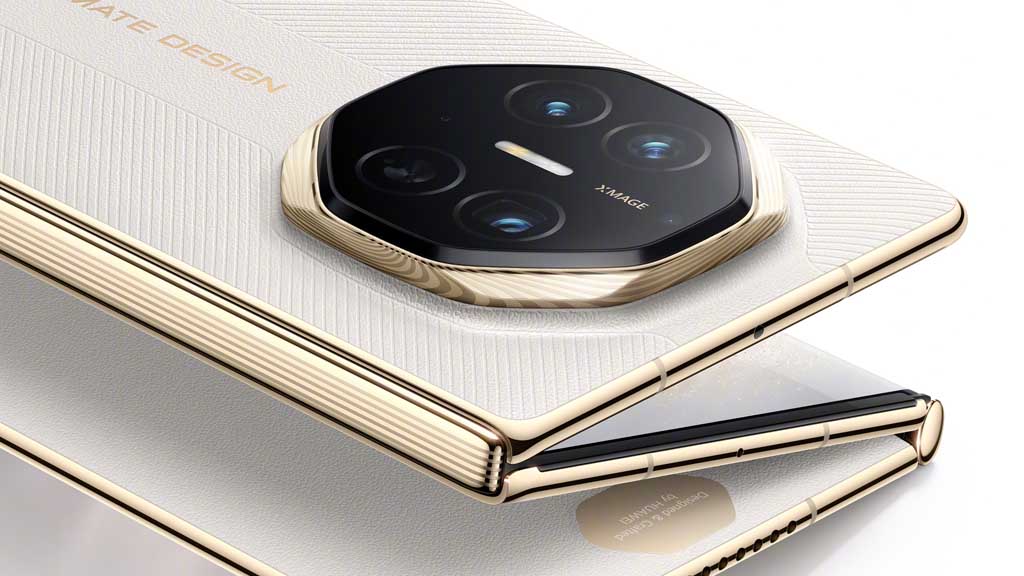
Cameras: Triple Threat (Foldably Speaking)
You might expect foldables to compromise on camera quality — Huawei chose otherwise.
-
Main camera: 50 MP, with a variable aperture (f/1.2 to f/4.0). That’s impressive — gives you control over light and depth.
-
Telephoto: 12 MP periscope, 5.5× optical zoom, with optical image stabilization (OIS).
-
Ultrawide: 12 MP, giving you a wider field-of-view.
-
Selfie / front: 8 MP, tucked in one of the outer panels.
For a folding device, that’s top-tier. The periscope zoom is a bold move — not many foldables go there. You can expect solid daylight shots; low light might be challenging (as always). But Huawei’s optical engineering shows here.
Battery & Charging: Big Screen Demands Big Juice
With all these panels, you’d think survival would be a problem. Huawei counters that by equipping the Huawei Mate XTs Ultimate with a 5,600 mAh battery (split across modules). That’s sizeable, but drive a 10-inch display and it gets eaten up fast.
Charging support:
-
Wired: 66 W (fast enough to get you a decent refill in 30–45 minutes)
-
Wireless: 50 W (nice to have, though slower)
-
Reverse wireless charging: about 7.5 W, for powering accessories or smaller devices.
In real life, it’s enough to last you through a full day of mixed use — but heavy users (gaming, video, multitasking) might find themselves looking for the charger before night.
Connectivity & Extras
You won’t miss the basics:
-
5G support
-
Wi-Fi 6 / AX, Bluetooth 5.2
-
USB-C (USB 3.1 Gen1)
-
NFC, GPS, etc.
-
Side-mounted fingerprint scanner
Huawei also teases accessories: a foldable keyboard with a built-in trackpad (turns it into a mini laptop), and cases with kickstands. If you want to road-test full productivity on this device, they help.
Price & Availability
This is premium stuff, so expect premium pricing. In China, the base 256 GB variant launched at around ¥19,999 (which converts to roughly $2,800+). Higher storage models (512 GB, 1 TB) cost significantly more.
When Huawei began its global launch (February 2025 in Malaysia etc.), pricing in other markets hovered around €3,499 for the 1 TB version. That’s steep — you’re paying not just for hardware, but for the “first mover” status of a tri-fold.
Availability is rolling out across Asia, Middle East and some European regions — but it’s not everywhere at once.
Pros & Cons: What You Get (and What You Risk)
What’s Awesome
-
Absolutely unique form factor: three display modes = versatility.
-
Top-tier cameras (especially the periscope zoom) for a foldable.
-
Solid chip, ample RAM, generous storage options.
-
Fast charging wired + wireless support.
-
Accessories boost its productivity potential.
What Might Hurt
-
Durability is a concern: more hinges = more points of failure.
-
Repair costs will be insane (screens, hinges, etc.).
-
Weight is substantial for a “phone.”
-
Ecosystem & app support: not all apps will scale or function well.
-
Price might deter most — only for true enthusiasts or early adopters.
From user discussions: some praise the hinge durability, others worry about the outer exposed screen. One comment said: “Soft screen on the outside is never going to work well … seems incredibly prone to damage.” Skepticism is natural. (I saw some of that on forums.)
Who Should Buy (and Who Should Wait)
If you’re a tech freak, someone who lives on the bleeding edge, and you have the cash — this is a dream toy. It bridges phone, tablet, mini workstation. If you love experimenting and don’t mind being in early adopter territory — the Huawei Mate XTs Ultimate is for you.
If instead you want reliability, long-term software support, lower repair risk, or you’re not sure about folding screens — wait a generation or two. Tri-folds are new, and new tech takes time to mature.
Final Thoughts: A Bold Leap, Not a Safe Bet
Huawei just blew up the foldable game with Huawei Mate XTs Ultimate. They said, “Why stop at two screens?” and took the risk. It’s intoxicating — the ability to shrink or expand your device as needed.
But here’s the honest truth: it’s more of a statement than a mainstream choice today. It’s expensive, fragile (relatively), and depends heavily on software support that’s still catching up.
Still, I love that this exists. If you’ve got the guts and the budget, it’s one of those “tell-about-it-to-future-you” gadgets you’ll enjoy messing around with. And in a few years, when tri-folds become the norm, you’ll look back and say, “I had one of the originals.”
Let me know if you want a spec sheet, comparisons with Galaxy Z Fold/OnePlus Open, or a user impressions piece next.